If you’ve spent a summer in the Brazos Valley, you already know the truth: a “95°” day on the forecast often feels like a lot more once the humidity rolls in off the Gulf. And while you’re inside enjoying the AC (smart move), your dog still needs their visit.
I wanted to pull back the curtain a little. A lot of what makes a great summer pet sitting visit in College Station happens quietly, before a single leash gets clipped on. So here’s what I’m actually doing during a 95° visit — the stuff you wouldn’t necessarily know unless you asked.
Before I even open the door: I check the real temperature
The number on the app and the temperature at paw level are two very different things. Dark asphalt and concrete can run 40 to 60 degrees hotter than the air. On a 95° afternoon, that pavement can climb past 140°, which is hot enough to cause painful burns on paw pads in under a minute.
So the first thing I do on arrival is the pavement hand-test: I press the back of my hand flat against the sidewalk or driveway and hold it there for about seven seconds. If I can’t comfortably keep it there, it’s too hot for your dog’s feet — full stop. That single test reshapes the entire visit.
I reroute the walk before we take a step
If the pavement fails the test, we don’t just power through a shorter version of the usual loop. I rebuild the route on the spot:
- Grass and dirt over concrete and asphalt, every time. We stick to lawns, shaded trails, and soft ground.
- Shade-hopping. I map the visit around tree cover and the shady side of the street, even if that means a less direct path.
- Shorter and slower. On the hottest days, the goal of the walk shifts from exercise to a quick, comfortable potty break. Tiring a dog out matters far less than keeping them safe.
Early morning and late evening are always the better windows for a real walk, so when your schedule allows it, I’ll happily aim visits there during the worst of the summer.
I check the water — and not just whether the bowl is full
Here’s something most pet parents have never thought about, and it’s one of my favorite small details to get right. A bowl of water that’s been sitting out in a warm room or a hot garage gets unappealing fast. Warm, stale water actually reduces a dog’s incentive to drink, which is exactly the wrong outcome on a scorching day.
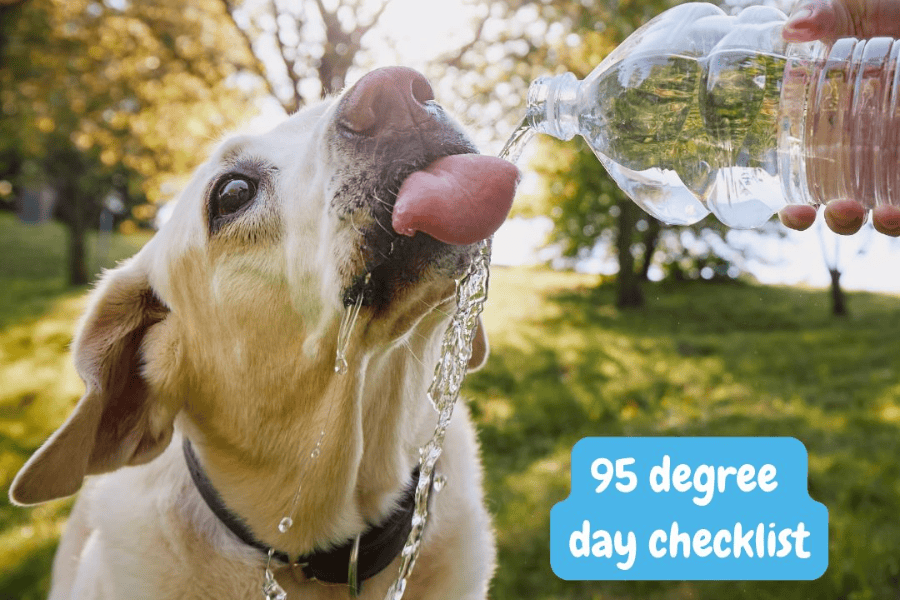
So I don’t just top off the bowl. I dump the old water, rinse it, and refill with fresh, cool water — and I’ll often drop in a few ice cubes to keep it inviting. Cool, clean water gets a dog drinking, and hydration is your front-line defense against heat trouble.
I’m watching your dog the entire time for early heatstroke signs
This is the part that really matters. Heatstroke can escalate quickly, and catching it early is everything. Throughout the visit I’m reading your dog’s body for the warning signs, including:
- Excessive panting that won’t slow down — frantic, heavy panting that doesn’t ease up even after we stop and rest.
- Red or very dark gums instead of a healthy pink.
- Thick, rope-like drool that’s stickier and stringier than normal.
- Stumbling, wobbliness, or sudden lethargy, glassy eyes, or a dog that just wants to lie down and won’t get up.
- Vomiting or diarrhea paired with any of the above.
If I see these, the visit stops being a visit. I get your dog into shade or AC immediately, offer cool (not ice-cold) water, and start cooling them down with cool water on the belly, paws, and ears. If the signs are serious or aren’t improving, your dog goes straight to the vet — and you’ll hear from me right away. Certain dogs need extra watching, too: flat-faced breeds like bulldogs and pugs, seniors, puppies, overweight pups, and dark-coated dogs all heat up faster.
On genuinely dangerous days, we move the fun indoors
Some afternoons in Bryan-College Station are simply not safe for a real outdoor walk, no matter how we route it. On those days, I’m honest about it — and I adapt rather than push.
That means quick outdoor potty breaks only, then we channel that energy into indoor enrichment that’s every bit as satisfying as a walk:
- Puzzle feeders, snuffle mats, and lick mats that turn a meal or treat into a genuine brain workout.
- Frozen goodies like a stuffed, frozen Kong, which keeps a dog happily busy and helps them cool from the inside.
- Indoor games — gentle fetch down a hallway, hide-and-seek with treats, or a few minutes of trick training.
A tired brain makes for a happy, settled dog, and on a 110°-heat-index day, that’s the safe way to get there.
A couple of things I never do
For the record: I never leave a pet in a parked car, not even for a minute with the windows cracked. And I never assume a dog who wants to keep going is a dog who should keep going — plenty of dogs will run themselves into trouble in the heat because they’re having fun. Part of my job is being the one who calls it.
Why I’m telling you all this
Summer pet sitting in College Station is its own skill set. The difference between a good visit and a risky one usually comes down to a handful of small, deliberate choices that happen quietly while you’re at work or out of town.
I’d rather you know exactly what those choices are. When you trust someone with your best friend during a Texas summer, you deserve to picture precisely what’s happening on the other end of that visit — the hand on the pavement, the rerouted walk, the fresh bowl of cool water, the constant read on your dog’s comfort.
That’s the standard at Lucky Paws BCS, and it’s how we help keep BCS pets cool, hydrated, and safe all summer long.
Have questions about how I handle extreme-heat visits for your specific dog or cat? Just ask — I’m always glad to walk you through it. This article shares general dog heat safety tips for the Bryan-College Station summer and isn’t a substitute for advice from your veterinarian.